Stroke
Rehabilitation
Restoring independence & quality of life after stroke
Rebuild Pathways.
Reclaim Life.
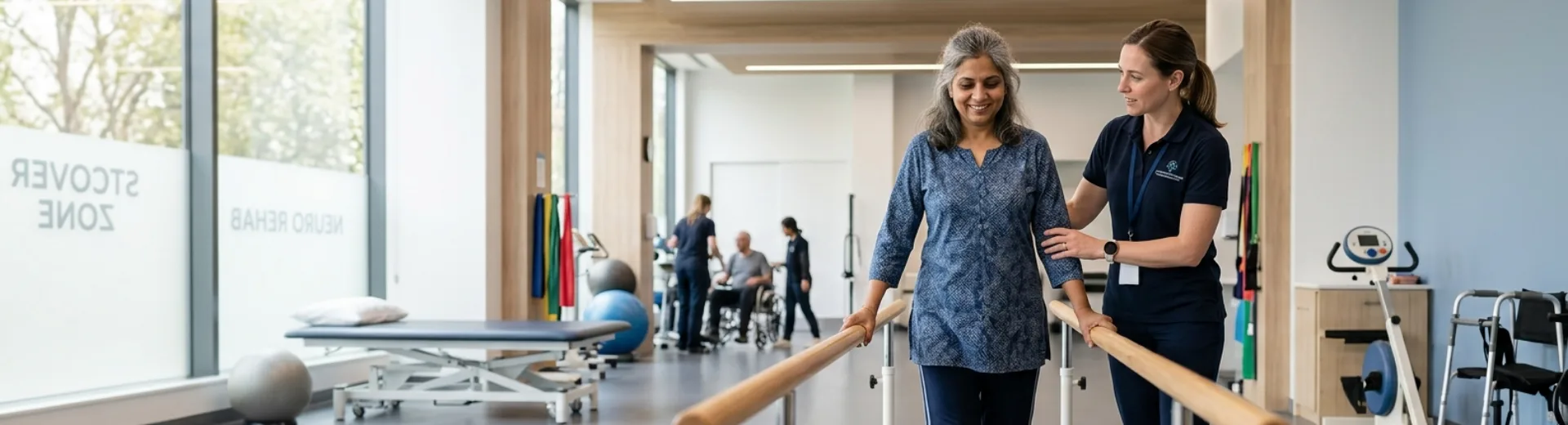
Stroke rehabilitation harnesses the brain's remarkable ability to rewire itself — a property called neuroplasticity. Our specialist neurological physiotherapists use intensive, task-specific training to rebuild motor pathways, restore movement, improve balance, and help patients regain functional independence at home and in the community.
Conditions We Treat
Comprehensive neurological rehabilitation for stroke survivors
Treatment Techniques
Neuroplasticity-driven techniques for measurable recovery
Task-Specific Training
Repetitive, goal-directed practice of functional tasks (walking, reaching, sit-to-stand) to reinforce new neural pathways in the brain.
Balance & Gait Training
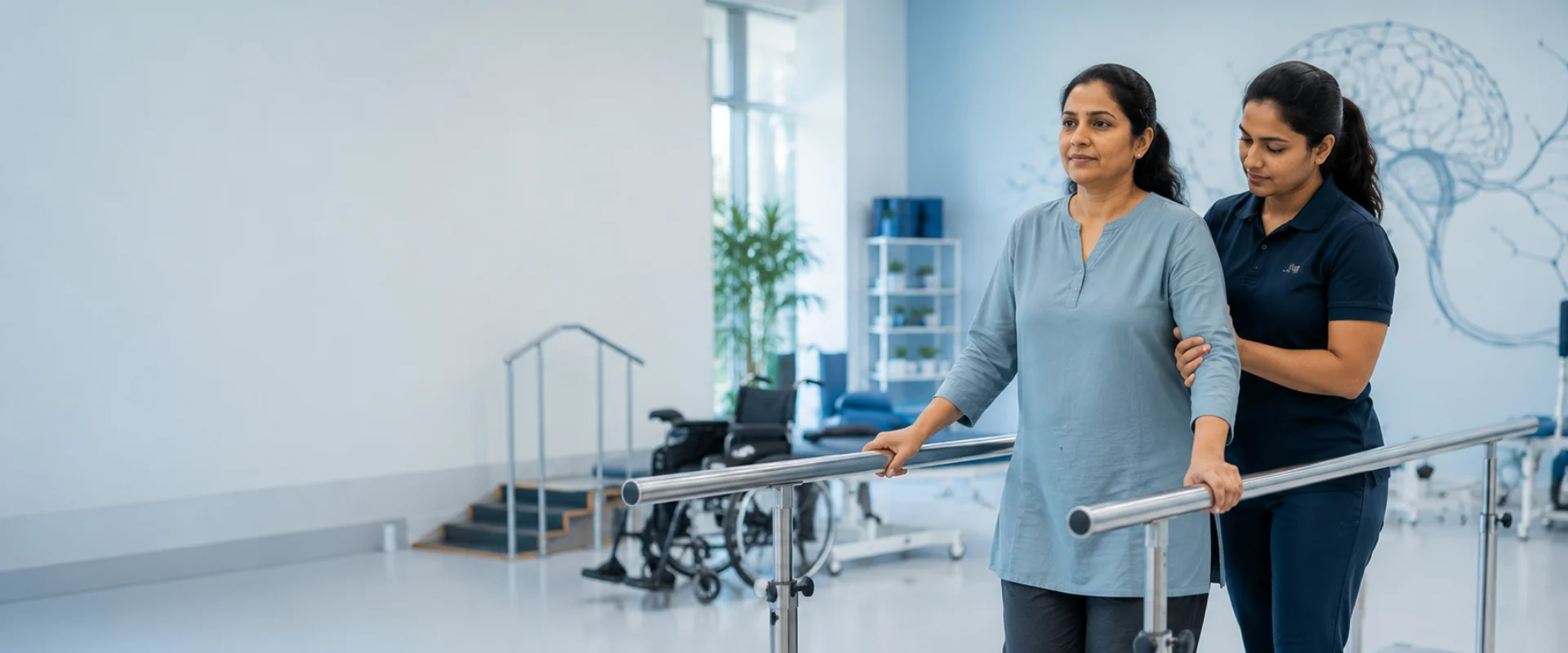
Bobath-based approach and treadmill training to improve walking quality, step symmetry, and dynamic balance in daily activities.
Upper Limb Rehabilitation
Constraint-induced movement therapy, mirror therapy, and fine motor exercises to restore hand and arm function for daily living tasks.
Neuromuscular Electrical Stim
NMES and FES (Functional Electrical Stimulation) to reduce spasticity, activate weakened muscles, and support motor re-learning.
Your Recovery Journey
A compassionate, structured program designed around your goals
Neurological Assessment 60–90 min
Detailed assessment of motor function, sensation, balance, gait, and daily activity capability. Family involvement is encouraged. Goals are set collaboratively.
Intensive Rehabilitation Phase 3–5 sessions/week
High-repetition, task-specific therapy sessions to maximise neuroplasticity. Frequency is highest in the early recovery period when the brain is most responsive.
Functional Independence Training Ongoing
ADL (Activities of Daily Living) training, home environment assessment, and adaptive equipment recommendations to maximise safety and independence.
Caregiver Education Integrated
Family and caregiver training on safe handling, transfer techniques, and how to support home exercise programs between clinic visits.
Community Reintegration Long-term
Support for return to social activities, outdoor mobility, and community participation with ongoing monitoring and adjustment of the rehabilitation plan.
Expected Outcomes
Meaningful, lasting functional improvements for stroke survivors
Frequently Asked Questions
Important questions answered for stroke patients and families
As soon as the patient is medically stable — ideally within 24–48 hours of stroke onset. Early intensive rehabilitation significantly improves outcomes. It's never too late to start, but earlier is always better.
Recovery is highly individual. Most improvement happens in the first 3–6 months, but neuroplasticity continues for years. With consistent rehabilitation, patients continue to improve well beyond the first year.
Yes. For patients who cannot travel, we offer home physiotherapy visits. We also provide a comprehensive home exercise program with caregiver training so rehabilitation continues between clinic sessions.
It's never too late. Even patients years post-stroke can achieve meaningful improvements with intensive, goal-directed rehabilitation. The brain retains its capacity for neuroplasticity throughout life.
Yes. We have experience in paediatric neurological rehabilitation for children who have experienced stroke or other acquired brain injuries. Treatment approaches are adapted for age-appropriate goals.
